
10 Brand Monitoring Tools Compared for 2026
Compare 10 brand monitoring tools on pricing, alerts, sentiment, integrations and limits, with picks for local businesses and e-commerce stores in 2026.
A regular customer spots the complaint first. Your café, salon or online shop gets a detailed forum post on Friday night, other customers add their stories over the weekend, and you only hear about it on Monday at the counter. Now you're responding in public, after the conversation has grown.
Brand monitoring tools help close that gap. They track reviews, social posts, news, blogs and forums for your business, products and competitors, then flag mentions that may need a response. The stakes are clear in France: 96% of respondents in an IFOP survey said a company's online reputation influenced their purchasing decisions, while 88% consulted consumer reviews, forums or blogs before buying online, according to the IFOP online reputation study results.
The right tool depends on the job. A local business may need to catch new reviews; an e-commerce team may need to watch a product launch or respond to a complaint spike. Wispra addresses a different need: improving how a business appears in AI-generated recommendations, rather than tracking existing mentions. These products are not directly comparable by mention volume.
Prices and limits also vary. Caps and keyword limits are noted where vendors publish them. For tools with custom pricing, request a quote to confirm what monitoring limits and features are included.
1. Wispra
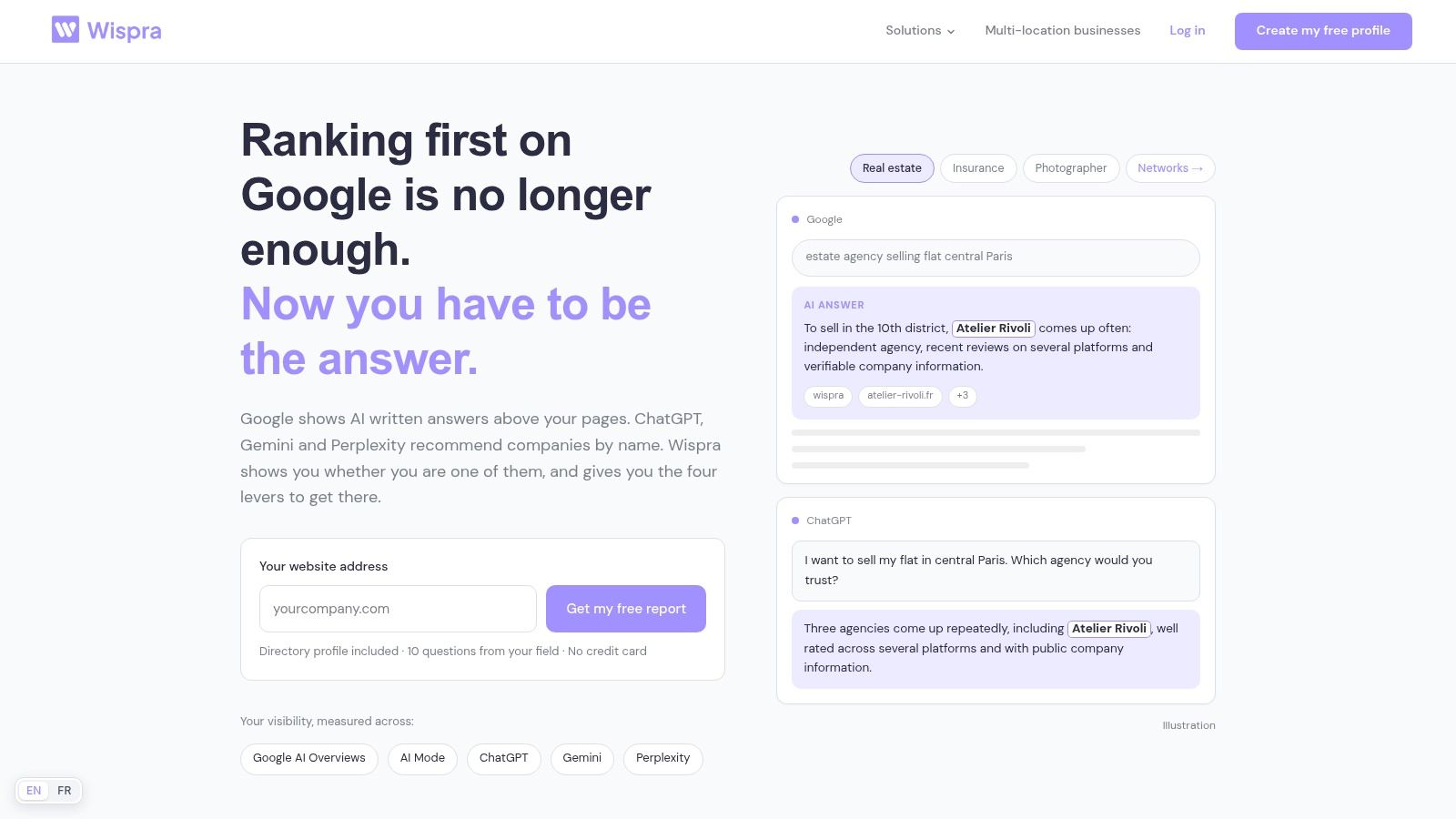
Wispra addresses a different job from tools that track existing mentions. It is a GEO (Generative Engine Optimization) platform designed to help AI systems such as ChatGPT, Google AI Overviews and AI Mode, Gemini and Perplexity find and assess business information when generating recommendations. For a local business or small e-commerce store, that means working on how the business is represented in AI answers, rather than monitoring a stream of social posts or reviews. Keep those categories separate when comparing tools.
How the Work Is Organised
Wispra combines an AI-readable business directory, structured information about services and products, review and reputation details, and reporting on visibility across questions in your industry. Its approach focuses on four areas a business can work on: verified identity, authority, reputation and expertise. Businesses looking to measure citations can use this comparison of AI citation tracking tools, which covers a different measurement job from counting brand mentions.
Setup takes about two minutes, with no website installation or changes. The free plan has no stated end date and includes a profile and a visibility report across 10 industry questions, without requiring a credit card. The Performance plan is €24 per month excluding VAT, with no long-term commitment. Wispra says profile information remains online after cancellation, while ongoing tracking and new publications stop.
- Best fit: Local businesses, freelancers and small e-commerce firms working to appear in AI-generated recommendations.
- Limit to know: AI recommendations are not guaranteed, and Wispra does not promise a timeframe for citations or visibility gains.
- Social proof: Wispra's site includes a photographer's testimonial and mentions coverage in Le Ptit Digital and BetaList. These are vendor-presented claims, not independently verified evidence of performance.
2. Brand24
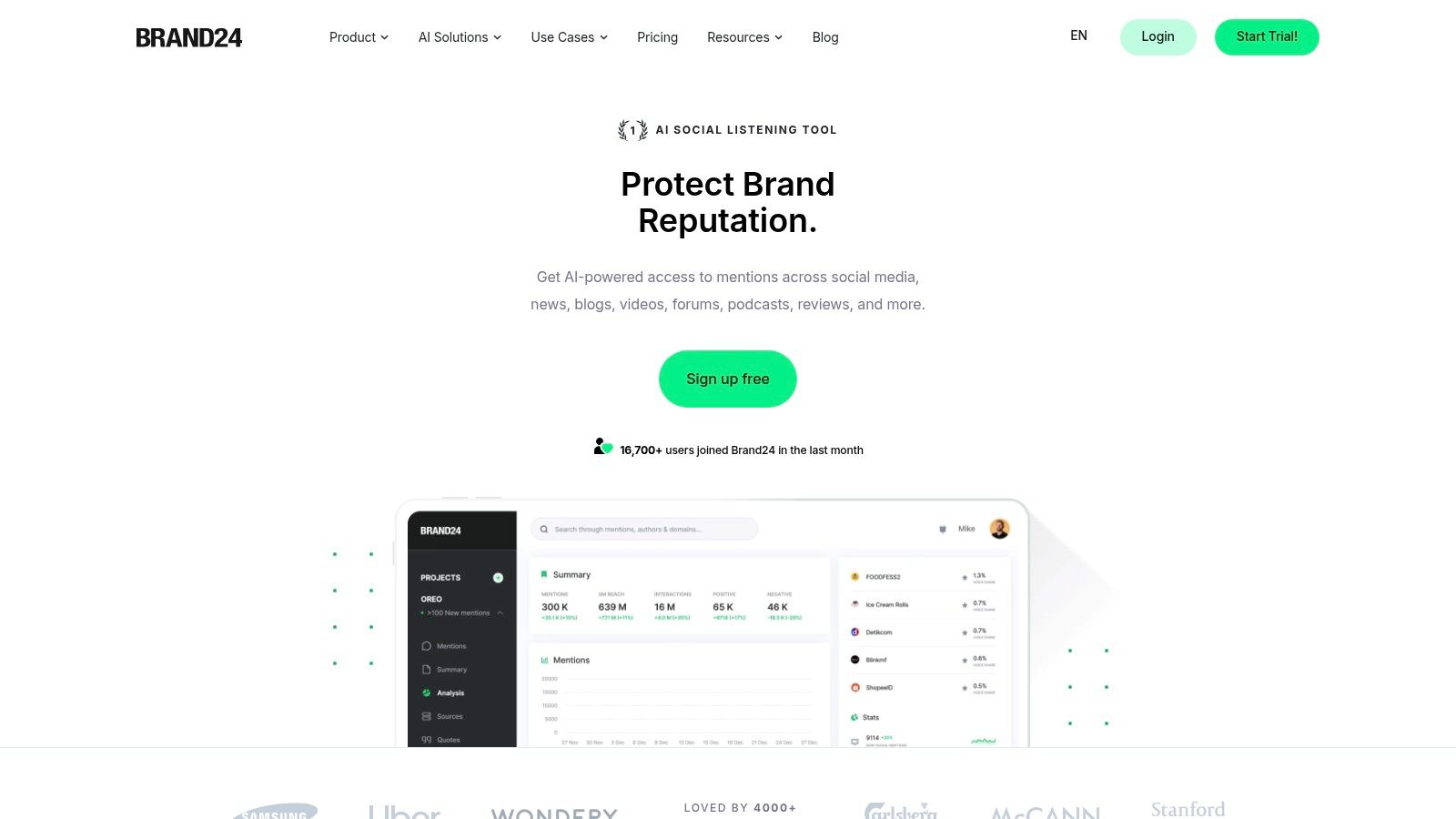
If your job is watching a product launch across many source types at once, Brand24 is a practical starting point. It monitors social networks, news, blogs, forums, review sites and podcasts, then combines mention volume with reach, engagement and sentiment in one dashboard. That mix helps you tell a genuine complaint spike from a busy but harmless launch day.
What It Costs in Practice
The Individual plan is $249 per month, or $199 per month billed annually, for 3 keywords and 2,000 monthly mentions. For a small shop that cap may be fine. For a brand name that's also a common word, you'll burn through it on noise. Real-time updates and advanced AI-assisted analysis sit on higher tiers, so budget above the entry price if speed matters.
- Strength: Broad source coverage with self-serve plans, published pricing and a 14-day trial.
- Strength: Sentiment and reach data sit beside raw mentions, so prioritising replies is easier.
- Trade-off: The entry plan is expensive for a small business, and keyword and mention limits bite quickly.
Practical rule: Run your noisiest keyword during the trial, not your cleanest one. That's the query that decides your real monthly bill.
3. Awario
Awario is the budget option I reach for when a small team needs keyword alerts without an enterprise contract. It monitors topics across the web and social channels, and its Boolean search earns its keep immediately. If your bakery shares a name with a band or a place, you can exclude the unrelated uses instead of paying to store them.
Starter is $49 per month, or $29 per month billed annually, for 3 topics and up to 30,000 new mentions per month. That mention allowance is generous at this price, and the trial doesn't require a credit card. Competitor tracking is included, which helps when you're watching a rival's launch alongside your own name.
Where the Caps Show
- Topic limits: Three topics disappear fast once you add your brand, a flagship product and one competitor.
- Exports: Reports and CSV exports aren't in Starter, so sharing data outside the tool means upgrading.
- History: Stored-history caps limit how far back you can compare, which matters for seasonal businesses.
4. Semrush Brand Monitoring
Semrush Brand Monitoring fits teams that already use Semrush for SEO and want mention tracking alongside their search work. It reports sentiment and share of voice, helping teams assess whether a mention spike changed their position against competitors or merely added noise. It monitors existing mentions, so compare it with tools built for that job, rather than with services focused on how businesses appear in AI-generated recommendations. For a wider feature and cost comparison, see this roundup of Semrush alternative tools.
Language filtering includes French, a useful option for businesses monitoring French-language mentions. Sentiment scores can misread phrasing, accents, and place names, so test your own queries before relying on them.
Pricing and Limits
The app costs $79 per month for 3 queries, with additional query and mention bundles available. That makes the starting price clear, but adding competitors or product lines can raise the monthly cost. It does not replace deep enterprise social listening. Treat it as mention tracking for SEO-led teams, not a crisis-response tool.
5. Mentionlytics
Mentionlytics scales from small brands to agencies, which makes it a sensible middle option if you're not sure how much monitoring you'll need in a year. It covers social and web mentions with sentiment and emotion analysis on eligible tiers, so you can separate angry customers from merely disappointed ones when you're deciding who gets a reply first.
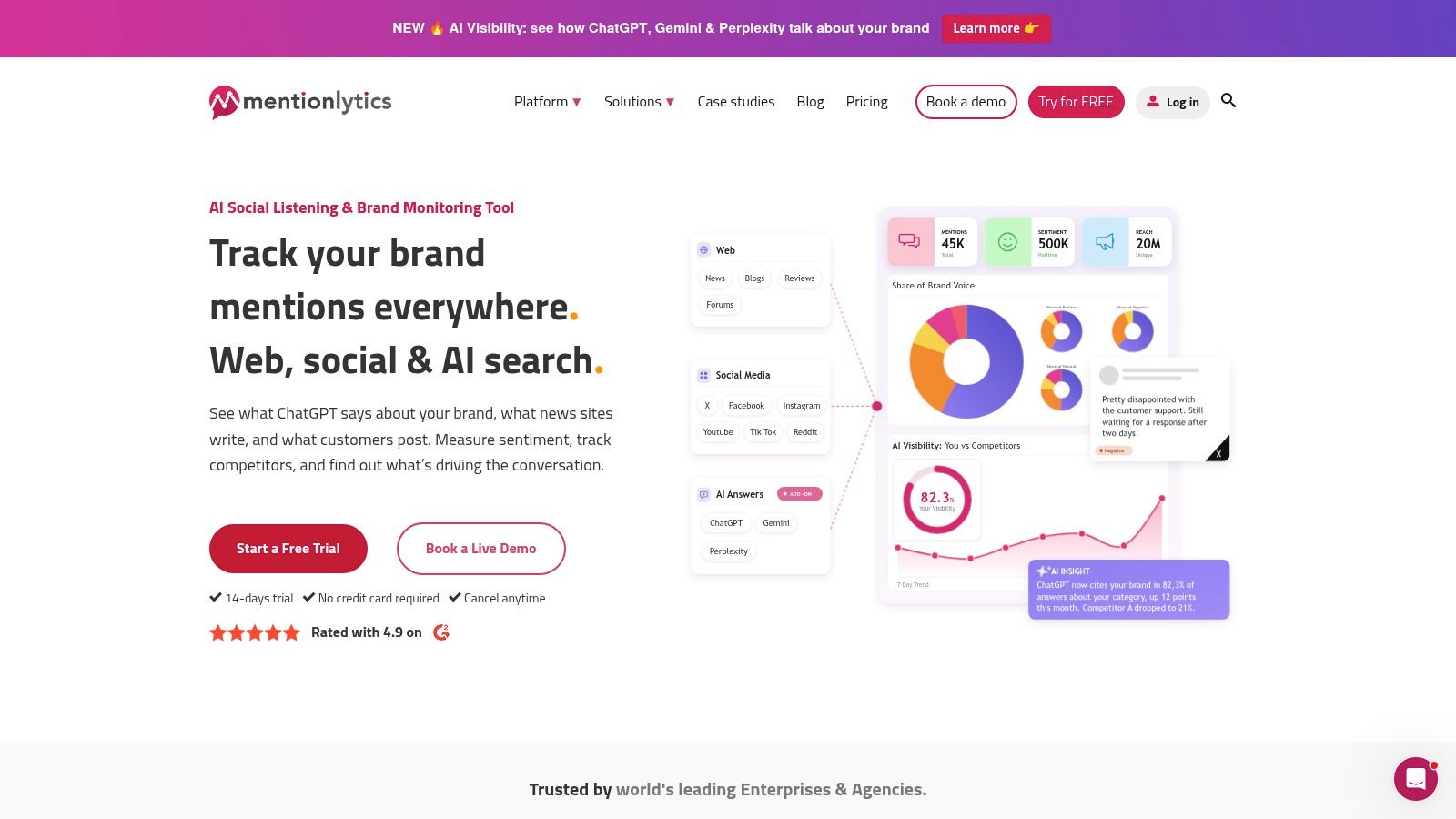
Basic is shown at $49 per month billed yearly as a limited-time offer, including 3 keyword rules and 5,000 monthly mentions. That's enough for a single local brand. It isn't enough for an agency juggling several clients, so check the higher tiers before you build client reporting around it.
One point deserves care. The AI Visibility add-on is optional and not included in every plan, so if AI answers are your reason for buying, price the add-on into your comparison from day one. Entry and mid-tier plans also limit rules and mentions, which is where small teams usually get caught out.
6. Determ
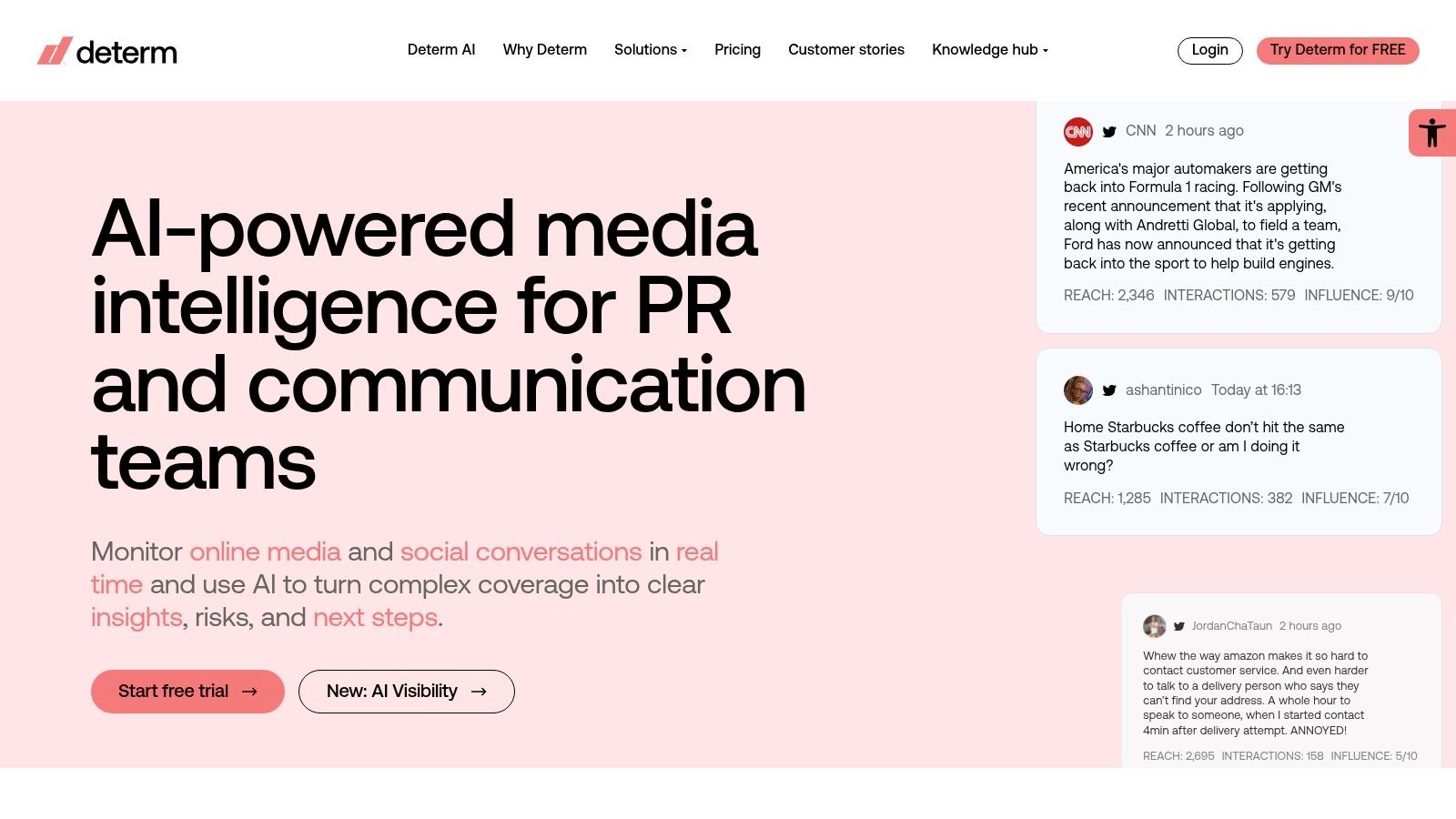
Determ suits organisations following brands, competitors and industry topics across online sources, with real-time and spike alerts when mention volume jumps suddenly. AI-generated summaries help when a story breaks and you need the shape of the coverage quickly, before you've read every article. Slack and Microsoft Teams integrations mean alerts land where your team already works.
Euro Pricing, Plainly Stated
Expand is €299 per month, or €249 per month billed annually. Command is €499 per month, or €416 per month billed annually. Listed plans include unlimited users, which removes the per-seat maths that makes other tools unpredictable, and there's a five-day trial without a credit card.
- Strength: Published euro pricing, which simplifies budgeting for French teams.
- Trade-off: Entry pricing sits above most SMB tools, and plans still cap topics and mentions.
- Check first: Print and broadcast availability can vary by region, so confirm French coverage for your sector.
7. Mention
For a local business, review monitoring can help catch customer feedback alongside brand mentions. Mention combines monitoring across social platforms, news, blogs, forums and review sites with review monitoring and competitive analysis. In France, 50% of people had posted a rating, review or comment about a product or service, according to the French government's Digital Barometer 2023 results.
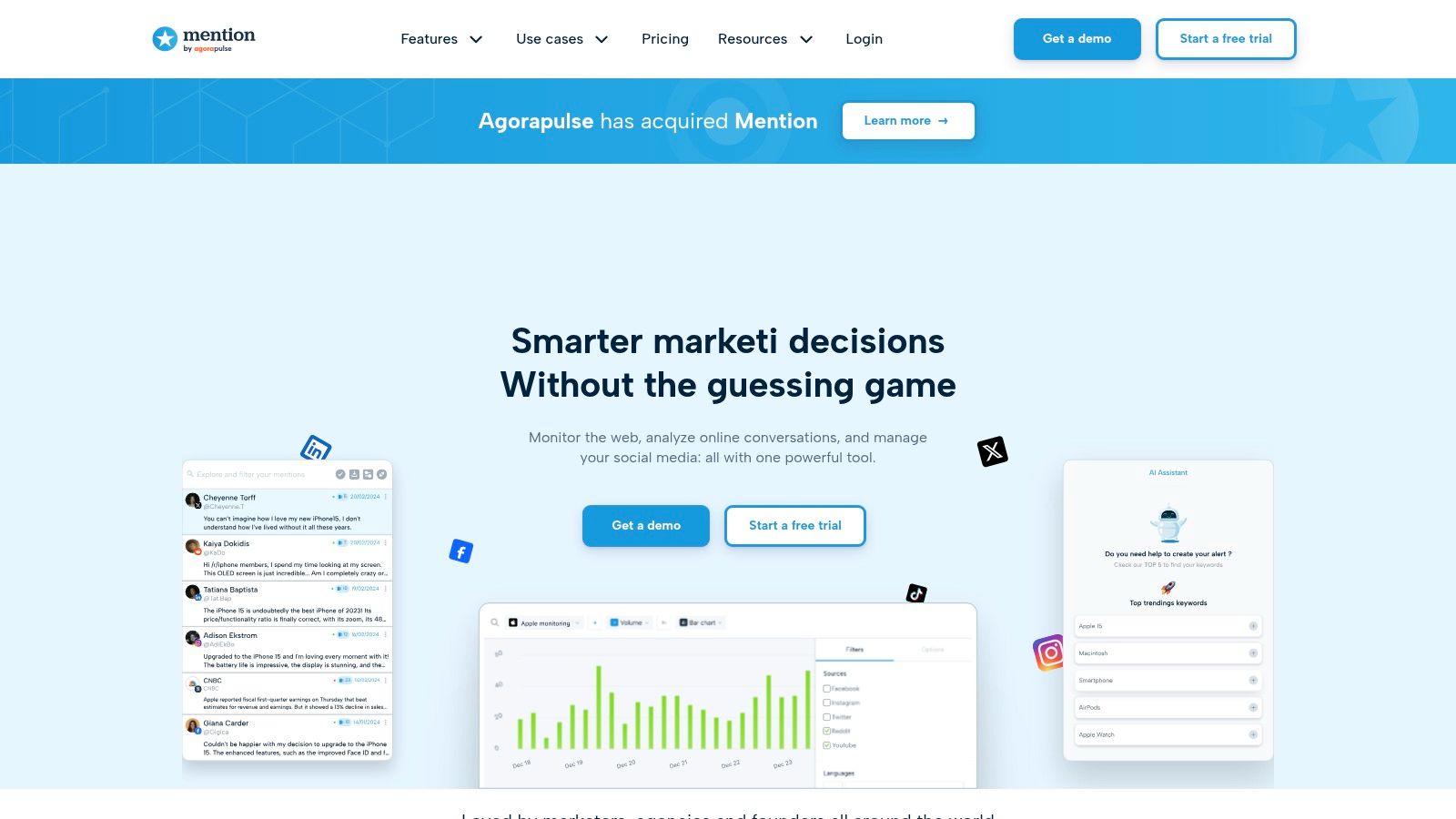
The Company plan costs $599 per month on an annual contract and includes 5 alerts and 50,000 monthly mentions, plus unlimited users. Boolean search and competitor benchmarking suit teams tracking several rivals. For a small team, check whether your expected mention volume fits the alert cap before committing.
Before buying, confirm on the current pricing page whether historical data, API access, publishing and responding features are included or cost extra. These terms can affect the actual monthly cost, so compare them with the specific job you need the tool to do.
8. Visibrain
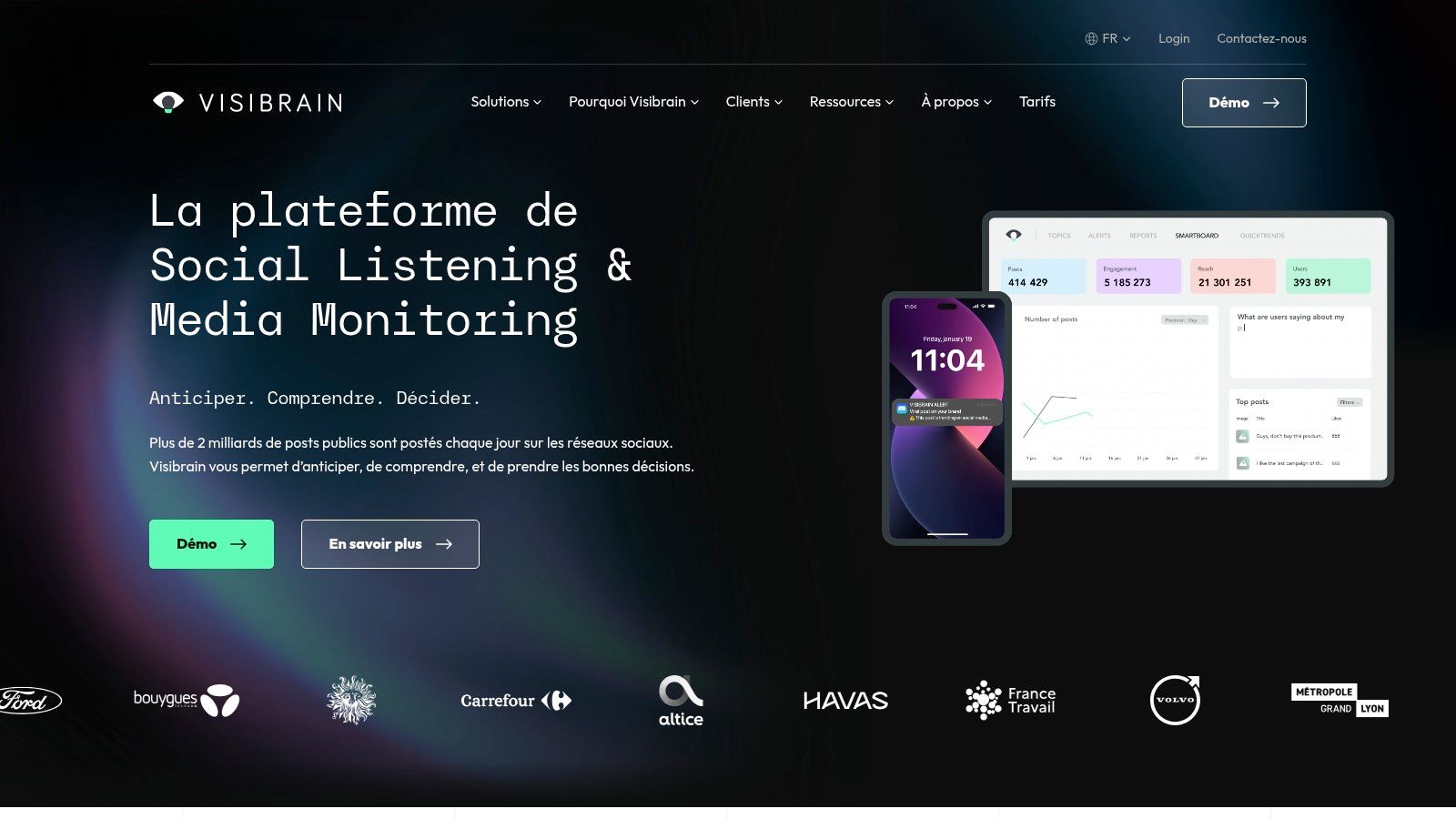
Visibrain is the French-language option on this list, built for brands, institutions and agencies. Its stated use cases are reputation monitoring, crisis communication, trend discovery, competitor monitoring and influencer identification, which tells you who it's for. If your risk is a story escalating across French media and social channels, that focus is relevant.
Context helps here. French companies with at least 10 employees reported 67% using social media in 2023, with 74% of those using it to develop their image, figures detailed in the YouGov social media landscape report for France. Image management at that scale is exactly Visibrain's territory.
What to Verify Before the Demo
Pricing isn't published and access is demo-led, so you can't self-serve a quick trial. Confirm source coverage for your specific channels, ask about French regional media, and be honest about scale. For a small business wanting simple review alerts, this is likely more platform than you need.
9. Meltwater
A team tracking a product launch across news and social channels may need more than mention alerts. Meltwater combines media intelligence and social listening, with configurable AI visibility tracking. Its value is bringing several communications jobs into one platform, though those modules and their coverage need to match the team's actual workload.
Meltwater suits larger communications or marketing teams that need to monitor media and social conversations across markets and share reporting across departments. A local shop looking for review alerts alone is unlikely to need that breadth. It also monitors existing media and social mentions; confirm separately whether the quoted AI visibility tracking covers the recommendations your team wants to assess.
Pricing is quote-based, with no public list price. Before comparing offers, ask the sales team to specify which markets and languages are covered, how many users are included, what historical data is available, and whether AI visibility tracking is included. Those details shape the scope and cost, so compare the quote with the specific monitoring job your team needs done.
10. Brandwatch Consumer Intelligence
A research team tracking a product launch across public conversations may need more than review alerts. Brandwatch Consumer Intelligence brings together social, news and other sources, with customisable dashboards, AI-supported analysis, alerts and reporting for large-scale consumer research. Its depth suits organisations with dedicated analysts, while a local shop monitoring customer feedback may find the setup and scope excessive.
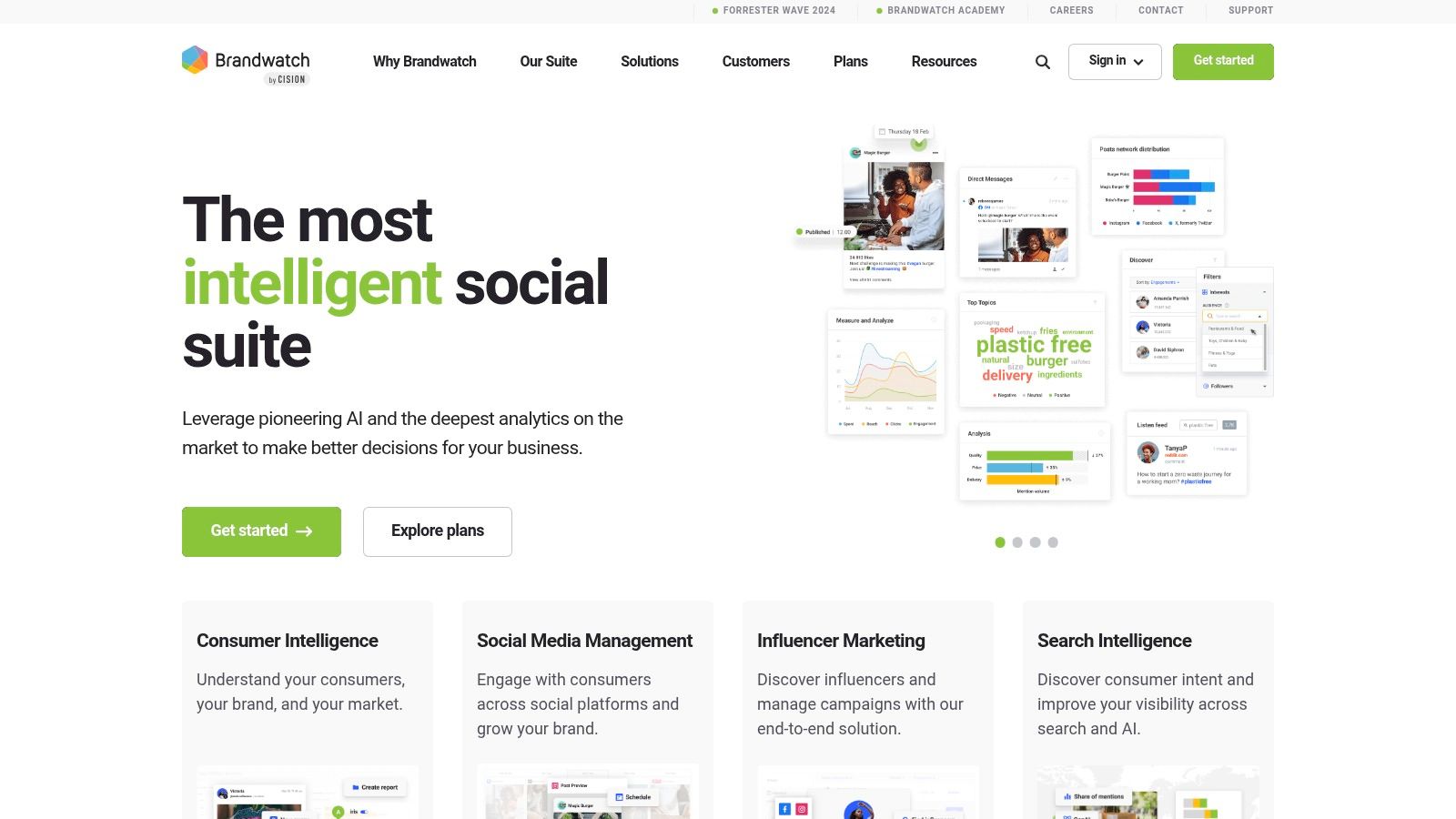
Brandwatch's strongest fit is complex segmentation and long-running category research. Teams can connect that work to a wider intelligence process using this guide to competitive intelligence for businesses.
Pricing requires a sales conversation, demo and quote, with no public list price for comparison. For smaller teams, analyst time is a real part of the cost: without someone to build queries and interpret findings, the feature set may go unused. Before signing, confirm that the proposed plan includes the platforms and historical data your research needs. Brandwatch monitors existing public conversations, while Wispra addresses how businesses appear in AI-generated recommendations, a different job rather than a like-for-like alternative.
Brand monitoring tools at a glance
| Tool | Listed starting price | Free option | Best for |
|---|---|---|---|
| Wispra | €24/month, excluding VAT | Free-forever profile and visibility report | AI search visibility for businesses |
| Brand24 | $249/month, or $199/month billed annually | 14-day trial | Broad online mention monitoring |
| Awario | $49/month, or $29/month billed annually | Trial; no credit card required | Affordable keyword and competitor monitoring |
| Semrush Brand Monitoring | $79/month | No free option stated | Semrush users tracking brand mentions |
| Mentionlytics | $49/month, billed yearly (limited-time offer) | No free option stated | Social and web listening for small brands |
| Determ | €299/month, or €249/month billed annually | Five-day trial; no credit card required | Media monitoring with alerts and AI summaries |
| Mention | $599/month, annual contract | No free option stated | Social, web, and review monitoring for teams |
| Visibrain | Custom pricing | No free option stated | Crisis and reputation monitoring for larger organizations |
| Meltwater | Custom pricing | No free option stated | Multi-market media intelligence and social listening |
| Brandwatch Consumer Intelligence | Custom pricing | No free option stated | Large-scale consumer research and social listening |
Start With the Smallest Tool That Answers Your Next Question
A local shop gets a detailed complaint on Friday evening, while its dashboard fills with unrelated mentions. The problem is not a shortage of alerts. It is having the right alert reach someone who can act on it. Start with the next decision your team needs to make, then choose the tool that answers it.
Name the question precisely. Do you need to catch local reviews before they sit unanswered, watch a product launch for early signs of a quality problem, track a named competitor, or check what AI assistants recommend to customers? These jobs require different coverage. Buying a broad listening platform to solve a narrow review problem can add cost without improving response times.
Match Sources to Where Customers Actually Talk
Monitor the channels customers use, rather than every source a tool offers. The 2025 France Num barometer reports that 46% of French companies present on social media use it at least weekly, while 13% post daily, as reported in the study of AI visibility among French companies. If your business has a quiet social presence, prioritize the places where customers already leave feedback.
For a low-volume local business, one incorrect opening-hours entry or unanswered negative review can matter more than dozens of irrelevant social mentions.
Reviews, maps, directories, and sector-specific forums may deserve alert coverage before broad social listening. Remove dormant profiles from your source list if they rarely produce useful conversations. Set alert thresholds around response risk, not mention volume alone. A detailed complaint with photos should reach the right person sooner than a burst of neutral brand mentions.
Budget for Caps, Then Trial Against Reality
Calculate the monthly cost using the limits you will hit in practice. Count keywords, including misspellings, product names, your own name if you are the public face, and a competitor. Check whether exports, historical data, or AI visibility features cost extra. Include those add-ons if you will need them soon, and treat an annual contract as a real commitment rather than a way to make the monthly price look lower.
Test the tool for two weeks against a real keyword set. Include a difficult search term, French accents, your town name, and common misspellings. Assess alert precision by asking how many notifications warranted action. Check whether sentiment labels make sense for actual French phrasing. A quieter feed is useful only if it catches the issues your team needs to handle.
Add integrations, team dashboards, and client reports after the core alerts prove reliable. They can support a working process, but they cannot fix poor source coverage or noisy results. Start with one clear monitoring job, verify that the tool handles it, and upgrade only when a specific gap remains.
If your next question is what ChatGPT, Gemini, Perplexity, or Google AI recommends to customers looking for your services, Wispra addresses that separate job: AI-generated recommendations, rather than existing mentions. Its free profile lets you check visibility across 10 real industry questions in about two minutes, without website changes or a credit card. Use the results to see where your business appears, where competitors appear instead, and which verified business details may need attention.