
10 SEO Tools for Agencies: Features, Pricing and Use Cases
Compare 10 SEO Tools for Agencies by features, pricing models, limits and best-for scenarios, plus how to track AI search visibility in 2026.
Monday starts badly for a lot of agency leads. A client asks why their brand no longer appears in AI-generated answers, and the stack you've built can't answer cleanly. The crawler shows technical health, the rank tracker shows keyword movement, and the reporting tool packages the data, but none of them alone explains AI visibility, local pack pressure, or how search discovery is shifting across engines. That's why the best SEO tools for agencies are usually a stack, not a single winner. The list below is organized by the job each tool does best, with a GEO lens where the platform already reports AI visibility. For broader context and workflow ideas, see the SEO resources on TheContentMap(SEO resources on TheContentMap).
1. Semrush One for all-in-one agency coverage
Semrush One is the broadest fit when an agency wants one platform to carry most client conversations. It covers keyword research, competitor analysis, Site Audit, backlinks, Position Tracking, and client-ready reporting, so strategists, content people, and technical SEOs aren't working in separate silos. It also brings AI visibility into the same workflow, which matters when a client asks about classic rankings and conversational discovery in the same meeting. Visit the platform at Semrush.
Where it works best
Semrush is strongest when the agency needs one system for research, delivery, and reporting. That makes it a sensible backbone for multi-location tracking, Looker Studio exports, and cross-channel planning. It's also the cleanest choice when junior staff need to learn one environment instead of three.
Practical rule: If your team keeps exporting data from one tool, cleaning it in another, and then rebuilding the same report every month, Semrush is usually the first stack candidate.
The trade-off is cost creep. As seats and limits grow, pricing can become less graceful than the feature list suggests. Some advanced datasets also sit behind higher tiers, so smaller agencies should test the exact client mix before standardizing on it.
A useful internal comparison is this Semrush alternative roundup if you want to sanity-check whether Semrush belongs at the center of your stack.
2. Ahrefs for backlink depth and competitor research
Ahrefs still earns its place when the agency job is link intelligence and competitive teardown. The platform is known for Site Explorer, Keywords Explorer, Rank Tracker, Site Audit, and Content Explorer, with growing AI-prompt and brand-tracking capabilities on higher plans. Agencies that build strategy from competitor link profiles and SERP history usually get more value here than from broader but shallower suites. Visit Ahrefs.
Why agencies keep it in the stack
Ahrefs is strong when you need reliable link context fast. That makes it useful for prospecting, authority benchmarking, and spotting pages that are pulling disproportionate attention in a niche. The interface is focused enough that teams often use it as the first stop for competitive research before moving to execution tools.
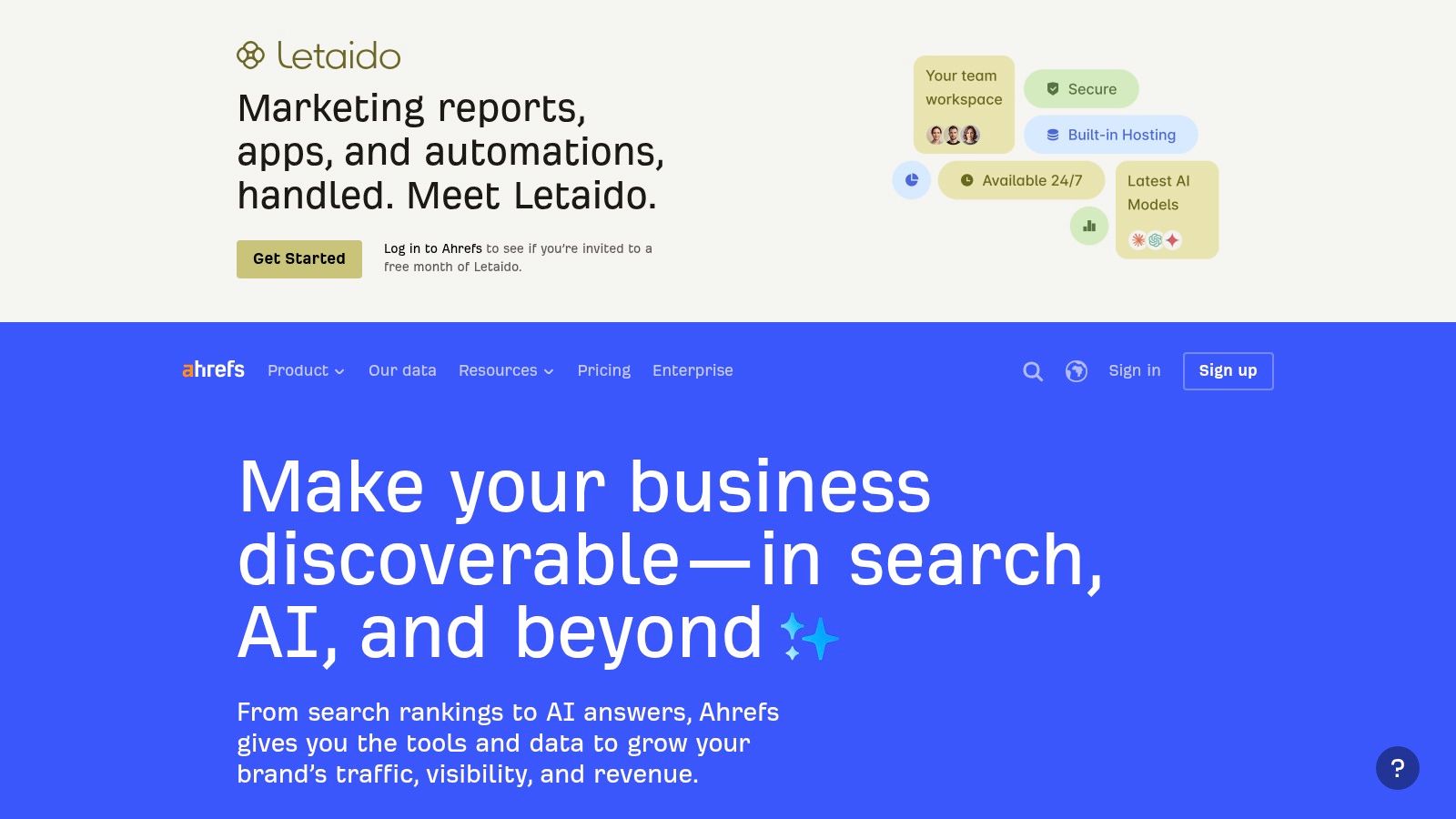
The compromise is that lower plans can feel tight once more than a few people are using the account. Agencies that rely on frequent rank refreshes should check plan behavior carefully, because the day-to-day workflow matters more than the marketing page. Ahrefs is best treated as the research specialist, not the whole stack.
3. SISTRIX for France-friendly visibility history
SISTRIX fits agencies that care about long-term visibility context, especially across European markets. Its Visibility Index gives historical perspective, and the platform's country and language-specific setup is useful when French SERPs behave differently from broader EU benchmarks. For agencies comparing client and competitor movement over time, that history can be more valuable than a fancy dashboard. Visit SISTRIX.
The practical agency angle
This tool works well when a team needs benchmark data that doesn't reset every month. It helps with client conversations where the real question is not “did rankings move?” but “has visibility been trending up or down for a year?” That's a better starting point for retainers than a simple snapshot.
SISTRIX also brings an AI check and prompt tracking beta, which makes it relevant for GEO-aware reporting. The feature set is still more about visibility analysis than end-to-end execution, so most agencies will pair it with a crawler, a tracker, or a reporting layer. It's a good fit when the client values context and you want a platform that feels rooted in European search reality.
4. SE Ranking for affordable multi-client coverage
SE Ranking fits agencies that need broad coverage without paying for a premium suite. It handles rank tracking, website audits, backlink monitoring, competitor research, and client reporting, so it works well across many SMB accounts. For teams that want a solid operating system without the highest price tag, that trade-off matters. Visit SE Ranking.
Where it saves time
The platform works best when you need clear reporting and enough depth for day-to-day client work. It will not replace a specialist link tool or a heavy technical crawler, but it gives smaller teams a useful balance of price and capability. That makes it a practical fit when clients expect regular updates and reporting needs to stay efficient.
SE Ranking also fits the agency job where the question is not “did rankings move?” but “has visibility trended up or down over a year?” It helps in client conversations where long-term movement matters more than a single snapshot. For a deeper look at this space, see this guide to AI visibility tracking for marketers.
Its GEO posture is more conservative than newer platforms, so agencies should treat it as a classic SEO workhorse first. That still leaves room for a stack approach. Use it for multi-client coverage, then pair it with sharper tools for technical audits, local visibility, or reporting where AI search visibility already matters.
5. Myposeo for French local tracking
Myposeo is the French-market option that makes the most sense when your work lives inside local and national SERPs in France. Its strength is local rank tracking, Google Business Profile integration, multi-location monitoring, and reporting that feels aligned with French search behavior. For agencies managing local businesses, it keeps the workflow closer to the market you serve. Visit Myposeo.
Why local agencies notice it
The platform is useful when your account list includes clinics, retailers, franchises, or service businesses with several locations. That's because local SERP nuance matters more than fancy global features in many of those accounts. You need to know what's happening in the map pack, across devices, and by location, not just whether a desktop keyword moved one spot.
Myposeo is narrower than the biggest global suites, and that's the trade-off. It's more of a specialist tracking and reporting platform than an everything tool. For French agencies, that narrowness is often a feature, not a flaw.
6. Oncrawl for serious technical audits
Oncrawl is the technical platform to reach for when a site is large, messy, or operationally sensitive. It handles scalable crawling, log analysis, JavaScript rendering, Core Web Vitals integration, and reporting connectors, so it suits migrations and deep diagnostics better than a lightweight audit tool. Agencies doing real technical SEO can keep the conversation grounded in evidence instead of assumptions. Visit Oncrawl.
When it earns its keep
Use Oncrawl when the client site has enough complexity that a basic crawler starts hiding more than it reveals. Large estates, heavy templating, and recurring technical issues all benefit from deeper crawl logic and log-file context. That's where agencies can move from “the site has problems” to “this section is wasting crawl and this other section is under-linked.”
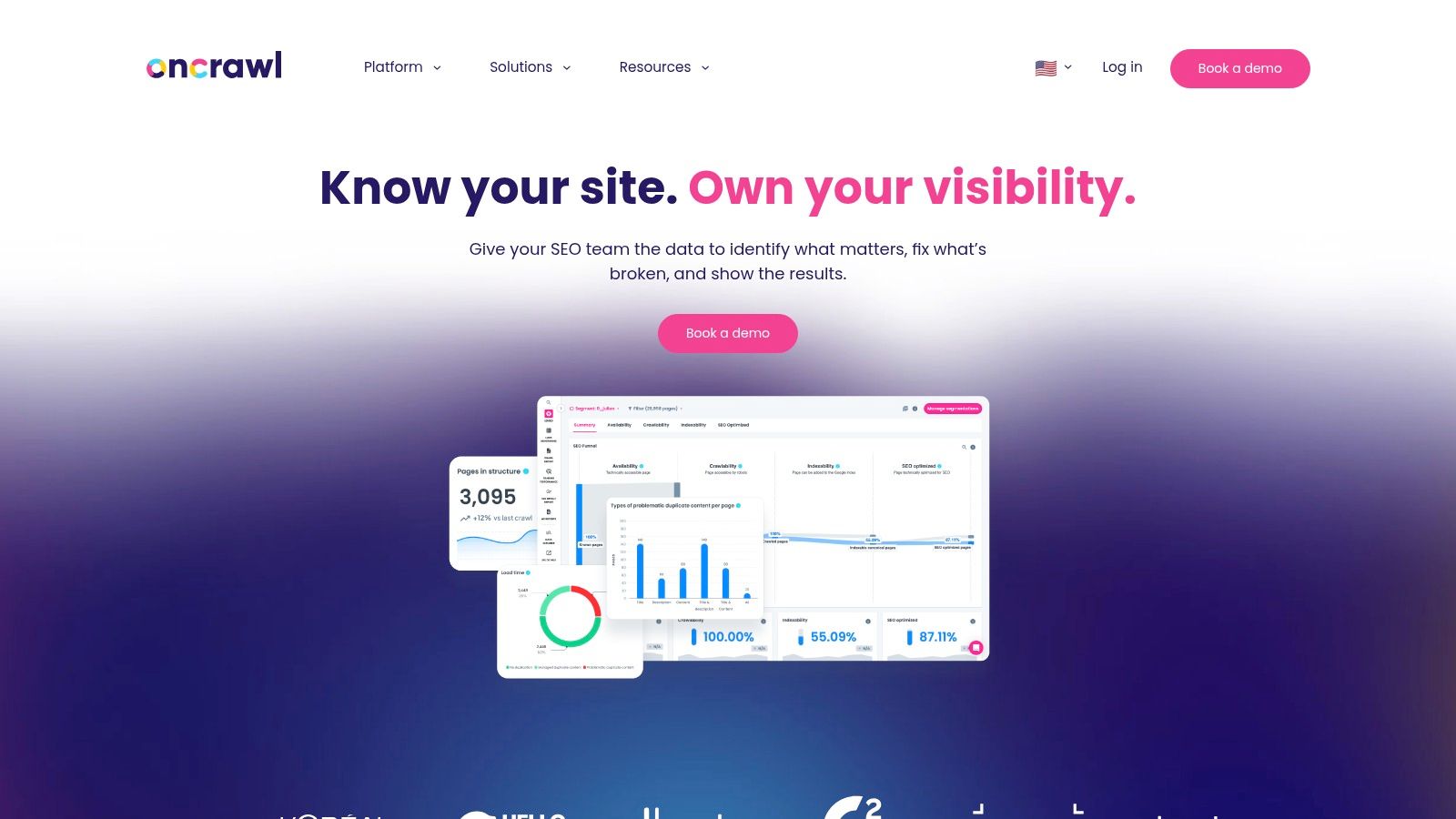
The learning curve is real. Non-technical account teams usually need help interpreting the output, which means Oncrawl works best when there's a technical lead in the loop. That's fine, because the right tool for audits should be precise, not friendly.
7. Botify for enterprise search operations
Botify is the enterprise option when SEO has to connect to activation and automation, not just diagnosis. It spans crawl and log analytics, automation, AI visibility views, and enterprise controls, which makes it relevant for very large sites and high-stakes clients. Agencies that sell search as an operating function, not a monthly checklist, will get the most from it. Visit Botify.
Where it fits
Botify works best when the agency has to show executives how search performance ties to business outcomes. That means less time spent on generic dashboards and more time connecting technical change, crawl behavior, and actionability. It's also the kind of platform where support and rollout help matter, because enterprise adoption rarely happens cleanly.
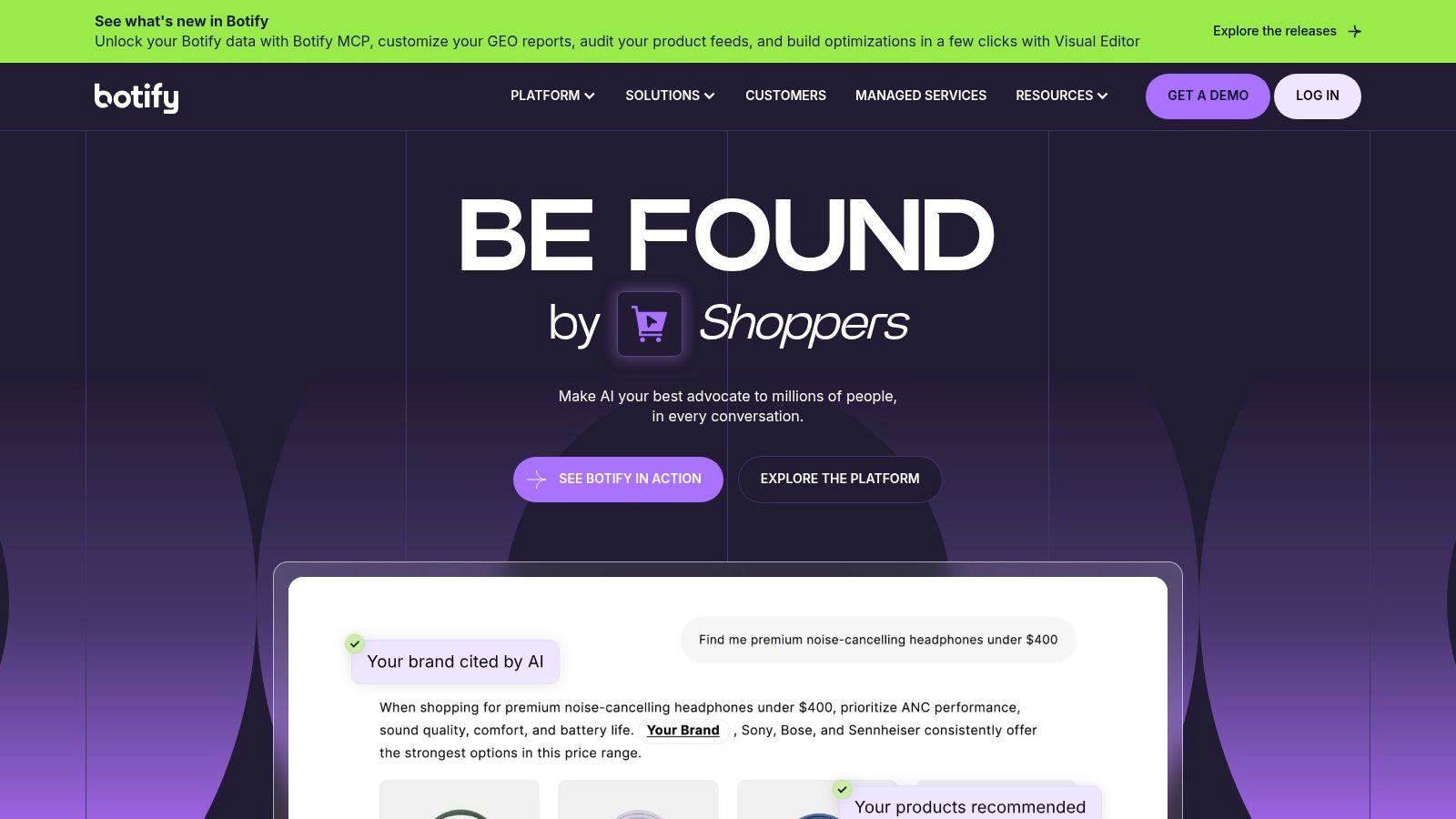
Botify is usually too much for smaller sites. That's not a criticism, it's the point. If the account doesn't need automation, the platform will feel like overkill.
8. AccuRanker for fast, SLA-friendly tracking
A client asks why rankings moved overnight. The answer has to be clear, fast, and repeatable. AccuRanker fits that job because it focuses on daily keyword updates, SERP feature tracking, tagging and segmentation, and dashboard integrations with BigQuery and Looker Studio. Agencies that need clean rank reporting can use it as a measurement layer. Visit AccuRanker.
The rank-tracking job it does best
For device-level or location-level movement, a dedicated tracker usually beats a bundled module. AccuRanker stays narrow on rank data, which keeps reporting cleaner across client accounts. That makes it useful for teams that need SLA-friendly updates without mixing tracking into research or auditing.
Understanding how the underlying data is collected helps here, and this primer on google scraping explains what trackers pull from the results page.
For teams comparing tracker options, this guide on position tracking tools is a useful companion. It helps clarify when a specialist tracker is better than a bundled module.
The trade-off is simple. You still need separate tools for research, content, audits, and local visibility. AccuRanker is strongest where rank tracking is the client-facing promise.
9. Screaming Frog SEO Spider for technical QA
Screaming Frog is still the most practical crawler for many agency workflows. It handles full technical crawls, custom extraction, JavaScript rendering, and integrations with Google Analytics, Google Search Console, and PageSpeed Insights, which makes it ideal for audits and pre-migration QA. It's fast, local, and unglamorous in exactly the right way. Visit Screaming Frog SEO Spider.
Why it stays on desks
This is the tool you use when you want to inspect the site, not just watch a dashboard. It's great for finding redirects, canonicals, duplicate metadata, internal link gaps, and page-level issues before they become client-visible problems. For agencies, that means cleaner onboarding and fewer surprises after launch.
Practical rule: If a site migration is serious, Screaming Frog should be in the process before content goes live, not after traffic drops.
The limitation is collaboration. Desktop-based crawling is great for control, but it doesn't replace shared reporting or historical trend layers. That's why agencies usually pair it with a dashboard or reporting tool.
If you want a deeper crawler-first lens, this article on crawlers in SEO is a good next read.
10. BrightLocal for local visibility and reviews
BrightLocal is the local SEO platform agencies reach for when the client has physical locations. It covers local rank grids, Google Business Profile audits, review management, citation work, and client reporting, which makes it a strong fit for SMBs, franchises, and multi-location businesses. When local visibility matters more than national keyword research, this is often the simplest answer. Visit BrightLocal.
Why local agencies like it
BrightLocal consolidates the messy parts of local SEO into one place. That matters because local work is operational, it's not just rankings. Reviews, profile health, citations, and map visibility all affect how a location performs, and clients usually want to see those moving together.
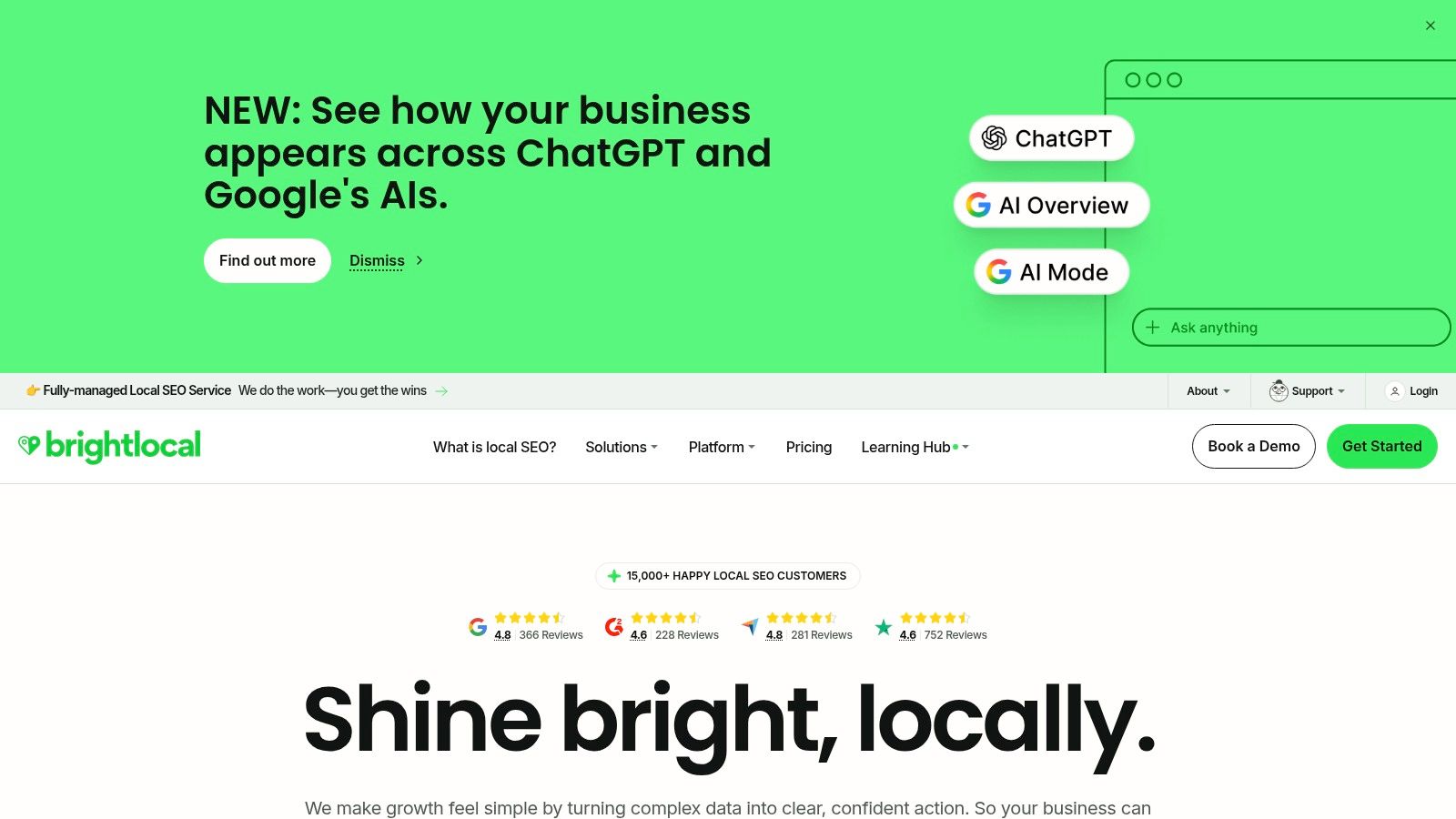
The pricing model fits local work, but costs rise as the number of locations grows. That's the key trade-off. For one or two brands with many locations, BrightLocal can be exactly right. For non-local SEO campaigns, it's much less useful.
Top 10 SEO Tools for Agencies, Feature Comparison
| Tool | Core features ✨ | Target audience 👥 | Quality ★ | Value 💰 | Standout/USP 🏆 |
|---|---|---|---|---|---|
| Semrush One (SEO + AI Visibility) | ✨ SEO suite, AI visibility, audits, reporting | 👥 Agencies, multi-location clients | ★★★★★ | 💰 Premium (scales with add‑ons) | 🏆 Broadest all‑in‑one SEO + AI visibility |
| Ahrefs | ✨ Backlink index, Site/Keywords Explorer, Rank Tracker | 👥 Agencies, enterprise researchers | ★★★★★ | 💰 High (clear tiers) | 🏆 Best backlink & SERP-history data |
| SISTRIX | ✨ Visibility Index (FR), rank tracking, API | 👥 EU/France agencies, local brands | ★★★★☆ | 💰 Mid (transparent pricing) | 🏆 France-relevant historic visibility |
| SE Ranking | ✨ Rank tracking, audits, content tools, API add‑ons | 👥 SMB agencies, freelancers | ★★★★☆ | 💰 Cost-effective (flexible add‑ons) | 🏆 Budget-friendly all‑in‑one for agencies |
| Myposeo (FR) | ✨ Local rank tracking, GBP metrics, multi-location | 👥 French SMBs, local agencies | ★★★★☆ | 💰 Mid (local-focused) | 🏆 Native French local SERP support |
| Oncrawl (FR) | ✨ Scalable crawler, logs, Core Web Vitals, JS render | 👥 Technical SEO teams, large sites | ★★★★★ | 💰 Enterprise (quota-based) | 🏆 Deep technical diagnostics at scale |
| Botify (FR) | ✨ Crawl+analytics+activation, AI visibility | 👥 Large enterprises, digital teams | ★★★★★ | 💰 Premium (sales-led) | 🏆 Automation + exec-level SEO to outcomes |
| AccuRanker | ✨ Fast daily ranks, SERP features, BigQuery API | 👥 Agencies needing SLA-grade tracking | ★★★★★ | 💰 Mid‑high (tracking-specialist) | 🏆 Very fast, precise position data |
| Screaming Frog SEO Spider | ✨ Desktop crawler, JS render, custom extraction | 👥 Technical SEOs, auditors, consultants | ★★★★☆ | 💰 Excellent (one-time/low cost) | 🏆 Fast, offline technical audits & QA |
| BrightLocal | ✨ Local grids, GBP audits, review & citation tools | 👥 Local agencies, franchises, SMBs | ★★★★☆ | 💰 Location-based (scales with locations) | 🏆 Purpose-built local SEO & review management |
Building an Agency Stack That Also Wins in AI Search
The cleanest agency stack is still simple. Start with one suite or specialist tracker for core reporting, add a technical crawler for audits, and add a local tool wherever the client has physical locations. Then layer AI visibility on top of the classic ranking view, because clients are now asking about both, and your reporting has to reflect that reality.
That's where a GEO layer becomes useful. Wispra sits in that space as a French SaaS with an AI-optimised business directory, an automated content engine, a tracking pixel for AI visibility analytics, and a real-time dashboard. It's set up in about two minutes, needs no website changes, and gives agencies a practical way to monitor conversational visibility alongside standard SEO outputs. For many French teams, that makes it a clean add-on rather than a disruptive replacement.
The best 30-day test is simple. Pick one client account, one core SEO suite, one crawler, and one local or AI visibility layer if the account needs it. Compare time-to-report, data completeness, alert quality, and whether the client can understand the output. If the stack makes your team faster and your reporting clearer, keep it. If it only adds more tabs, drop it before the next renewal.
If you want to add AI visibility to your agency stack without rebuilding the rest of your workflow, Wispra gives you a GEO layer for recommendations, content, and tracking in one place. It's built for teams that need measurable AI search visibility, not another dashboard to babysit.